Best Exercises to Improve Blood Circulation in Legs
If your legs feel heavy, tired, or slow to recover after activity, sluggish blood flow could be part of the picture. The best exercises to improve blood circulation in legs include walking, calf raises, cycling, and simple leg-elevation stretches, all of which encourage your veins and muscles to work together to move blood back toward the heart. These movements activate what's often called the "calf muscle pump," a natural mechanism that supports healthy circulation without requiring intense workouts. Below, we break down why leg circulation matters for overall fitness and how to build a simple, sustainable routine around it.
Why Leg Circulation Deserves Attention
Your legs contain some of the largest muscle groups in your body, and they rely on a steady supply of oxygen-rich blood to perform well, whether you're walking up stairs, finishing a workout, or just standing through a long day. When circulation slows, some men notice:
- Heaviness or fatigue in the legs, especially by evening
- Slower recovery after exercise or physical exertion
- Cold feet or a tingling sensation after sitting for long periods
- Reduced stamina during activities that involve standing or walking
Good circulation isn't just about comfort. It plays a supporting role in muscle recovery, energy levels, and the kind of physical readiness that active men rely on day to day.
The Best Exercises to Improve Blood Circulation in Legs
1. Brisk Walking
Walking is one of the simplest and most accessible ways to engage the calf muscle pump. Each step contracts and relaxes the calf muscles, which helps push blood upward through the veins. Aim for at least 20 to 30 minutes most days, and try to avoid long stretches of sitting in between.
2. Calf Raises
Calf raises directly target the muscles most responsible for circulatory support in the lower legs.
- Stand with feet hip-width apart
- Slowly rise onto your toes, then lower back down
- Repeat for 15 to 20 reps, 2 to 3 sets
This can be done anywhere, including at a desk or while waiting for coffee to brew.
3. Cycling or Stationary Biking
Low-impact cycling promotes rhythmic muscle contractions in the legs, which may help support blood flow while also being gentle on the joints. Even 15 to 20 minutes at a moderate pace can be beneficial.
4. Leg Elevation and Ankle Pumps
After a long day, elevating your legs above heart level for 10 to 15 minutes may help reduce pooling of blood in the lower limbs. Pairing this with gentle ankle pumps (flexing and pointing your feet) adds a light pumping action that supports venous return.
5. Bodyweight Squats and Lunges
These compound movements engage multiple large muscle groups at once, encouraging robust blood flow throughout the legs while also building strength and endurance.
- 2 to 3 sets of 10 to 12 squats
- Alternate with lunges for variety and balanced muscle engagement
6. Stretching and Mobility Work
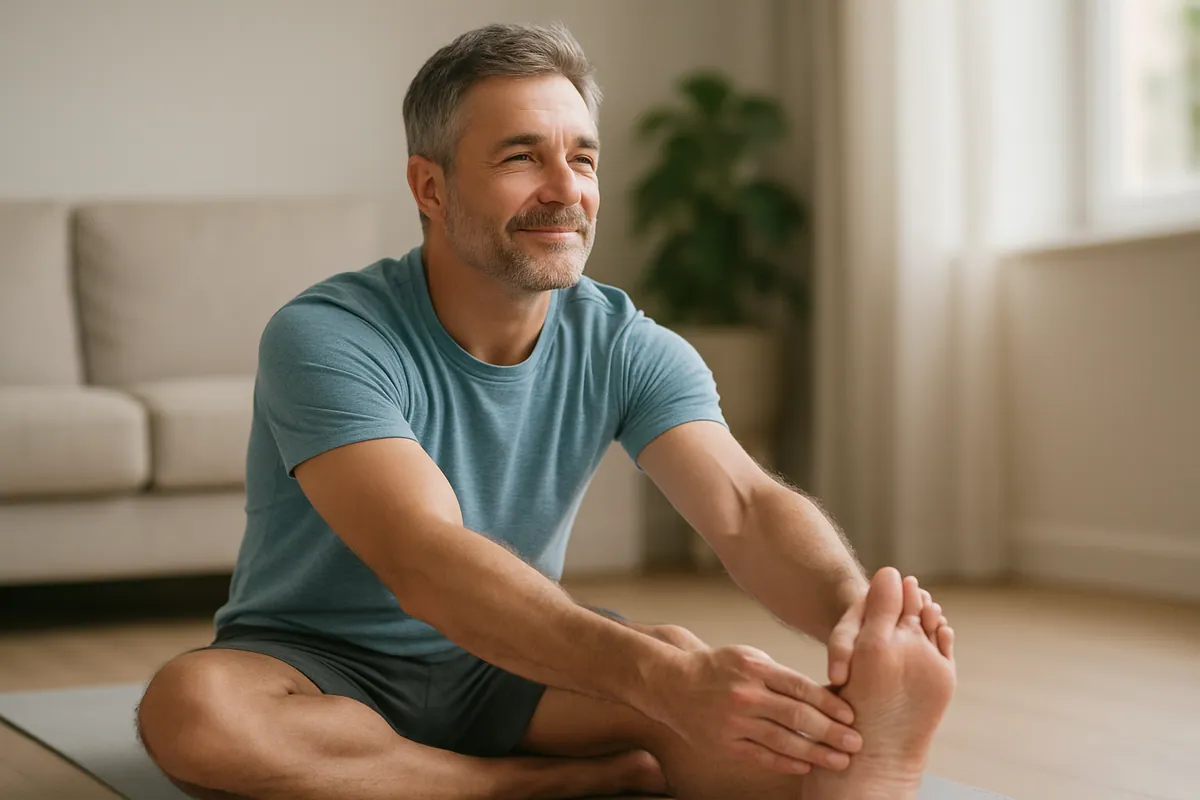
Tight muscles and stiff joints can restrict blood flow. Gentle stretching, particularly of the hamstrings, calves, and hip flexors, may help maintain flexibility and support circulation over time.
Building a Simple Weekly Routine
You don't need a complicated program to support leg circulation. Consider a rotation like this:
- Monday, Wednesday, Friday: 20-minute brisk walk plus calf raises
- Tuesday, Thursday: Cycling or stationary bike session
- Daily: A few minutes of ankle pumps or leg elevation, especially after prolonged sitting
- Weekend: Bodyweight squats, lunges, and a stretching session
Consistency tends to matter more than intensity here. Short, regular sessions spread across the week are generally more sustainable than occasional intense workouts.
Lifestyle Habits That Support Circulation Alongside Exercise
Exercise works best when paired with everyday habits that reduce strain on your circulatory system.
- Avoid prolonged sitting. Set a reminder to stand and move every 30 to 60 minutes.
- Stay hydrated. Adequate fluid intake supports healthy blood volume and viscosity.
- Wear supportive footwear. Poor-fitting shoes can affect posture and gait, indirectly influencing circulation.
- Mind your posture. Crossing legs for extended periods may restrict blood flow in some individuals.
- Limit excessive salt intake. High sodium levels may contribute to fluid retention, which can affect circulation comfort.
When to Pay Closer Attention
Mild heaviness or occasional tingling after a long day is common and often resolves with movement. However, persistent swelling, noticeable color changes in the skin, unexplained pain, or leg discomfort that doesn't improve with rest and movement are worth discussing with a healthcare provider, since these can sometimes signal underlying circulatory or vascular concerns that go beyond what exercise alone can address.
FAQ: Circulation and Leg Exercise
How quickly can exercise improve circulation in the legs? Some people notice reduced heaviness or improved warmth in their legs after just a few sessions, but meaningful, lasting changes in circulation typically develop over several weeks of consistent activity.
Is walking really enough, or do I need more intense workouts? For most men, regular walking combined with occasional strength-based leg exercises like squats or calf raises provides a solid foundation. More intense training can offer additional cardiovascular benefits, but it isn't strictly necessary to support basic circulatory health.
Can sitting all day undo the benefits of exercise? Prolonged sitting can partially offset the benefits of an active routine, since it encourages blood to pool in the lower legs. Breaking up sitting time with short movement breaks helps preserve the gains from your workouts.
Final Thoughts
Supporting healthy blood flow in your legs doesn't require drastic changes. Walking, calf raises, cycling, squats, and simple habits like leg elevation and movement breaks can all contribute to better circulation over time. Combined with everyday choices like staying hydrated and limiting long periods of sitting, these exercises may help you feel more energized, recover more comfortably, and stay physically ready for whatever your day brings.
This article is for informational purposes only and is not a substitute for professional medical advice.